Choosing a Big Trampoline involves more than selecting the largest model available. Space, user age, jumping style, and installation conditions all affect the decision. A wide circular trampoline may suit family play, while a rectangular design often provides stronger bounce control for focused training. The “best” type depends on real household needs, not advertising claims.
A reliable comparison should examine frame quality, spring protection, enclosure design, weight limits, and warranty coverage. Look closely at welded joints and galvanized steel, especially if the trampoline will remain outdoors. The mat should feel firm, evenly stitched, and resistant to ultraviolet damage. A safe setup also needs level ground, clear overhead space, and regular checks after storms. Small details matter.
Safety comes first.
This guide explains the main Big Trampoline types and the situations they suit best. It considers above-ground, in-ground, round, rectangular, and oval designs. It also discusses maintenance, supervision, and practical installation concerns based on manufacturer guidance and widely recognized safety practices. Still, no product is completely risk-free. Some safety advice sounds obvious but gets ignored when children are excited. A larger jumping area can also encourage crowded use, which increases collision risk. Careful buyers should measure twice, compare specifications, and question vague performance promises before purchasing. Experiences vary, and even a well-reviewed trampoline may disappoint if its size or bounce does not match the family’s expectations.
Definition and Main Features of a Big Trampoline
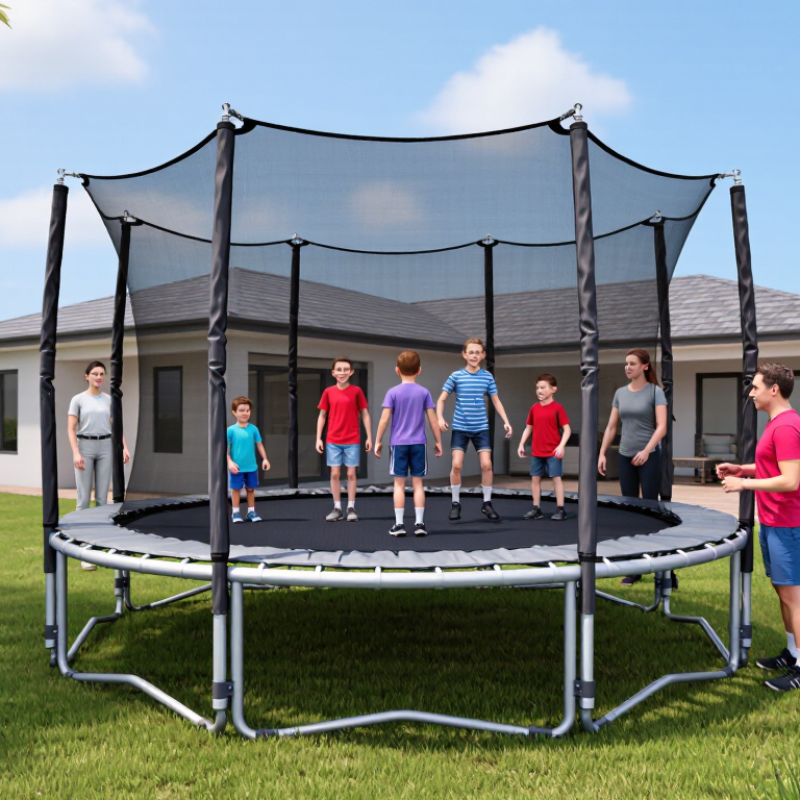
A big trampoline is a recreational trampoline with a jumping surface commonly measuring 12 feet or more across. The exact definition varies by manufacturer and region. Its main feature is usable space, allowing children or adults to move without feeling cramped. A large frame, strong springs, thick edge padding, and a surrounding safety enclosure are essential parts. Good models also include UV-resistant materials, rust-protected steel, and a clearly stated weight limit.
The best type depends on the available space and intended use. A round trampoline spreads movement toward the center, which suits casual family jumping. A rectangular design offers more consistent bounce and better supports basic training. An above-ground model is easier to inspect and relocate, but it needs secure anchoring in windy weather. An in-ground trampoline can look cleaner and reduce fall height, although drainage and installation require careful planning. I once underestimated the space needed around the frame. That mistake made access awkward.
Before choosing, measure the yard, overhead clearance, and surrounding safety zone. Check whether the frame feels stable and whether the padding stays firmly attached. The enclosure should have a reliable closing system and strong, well-fitted poles. A higher weight rating does not automatically mean safer performance. It only describes supported load under specific conditions. One jumper at a time is usually the most controlled arrangement, even on a very large surface. Adult supervision still matters. Maintenance is easy to postpone, and that is where small defects become serious.
How Big Trampolines Differ from Standard Trampolines
A big trampoline usually means a model wider than the common household size, often 14 to 16 feet across. The term is not a strict industry category. Some sellers may describe a 12-foot model as big. Measure carefully.
The main difference is usable jumping space. A larger mat gives children more room to spread out, but it does not make simultaneous jumping automatically safe. A standard trampoline may suit one jumper comfortably, while a bigger model can reduce accidental contact when activity is supervised.
More room also requires extra clearance from fences, branches, walls, and hard ground. In practice, I would leave extra space beyond the frame, not just the minimum listed in an instruction manual.
Size changes the equipment itself.
Big trampolines need stronger frames, more springs, and a stable base to manage greater movement and user weight. Their mats can feel slower near the edges, while the center often produces a higher bounce.
A standard trampoline is usually easier to assemble, move, and inspect. A large model may need several adults during installation and more frequent checks for loose bolts, stretched springs, or damaged padding.
I once assumed that the biggest mat offered the best experience. That was too simple.
Yard shape, user age, supervision, and maintenance matter just as much. A carefully anchored standard trampoline may be more suitable than an oversized one placed in a cramped garden. Bigger is useful, but only when the surrounding space can support it.
Key Types of Big Trampolines and Their Designs
A big trampoline usually means a jumping surface wider than six feet, with enough room for movement and a safety enclosure. Round models direct jumpers toward the center through balanced spring tension. They suit casual backyard use. Rectangular models create stronger rebound along the long axis, so gymnasts often prefer them. Square designs offer a compromise between efficient space use and consistent bounce. In-ground trampolines reduce the visible height, but drainage and surrounding clearance become critical. That difference matters.
The U.S. Consumer Product Safety Commission’s 2021 NEISS estimate recorded about 108,000 trampoline-related emergency-department-treated injuries. The figure is substantial, although national estimates cannot explain every accident. ASTM F381 covers trampoline construction, assembly, and use requirements, including frames, springs, padding, and enclosure systems. Look for thick, weather-resistant padding and a frame that stays stable under repeated loading. A net should attach securely around the jumping mat, not several inches above it. Rectangular frames may feel more powerful, but their design can demand better anchoring. I would not call any type foolproof.
Tips:
Measure the full safety zone, not only the mat. Keep hard surfaces, branches, and play equipment outside that zone. Use one jumper at a time, inspect stitching and springs monthly, and supervise children closely. Follow the manufacturer’s weight limits. These habits sound ordinary. They are often missed.
Safety, Space, and Maintenance Requirements
A big trampoline usually means a jumping surface about 12 to 16 feet wide. Its appeal is clear: more room for movement, not necessarily more users. CPSC NEISS analyses estimate roughly 800,000 trampoline injuries from 2009–2018. That evidence makes supervision and one-person use essential. The American Academy of Pediatrics also discourages home trampoline use, especially for younger children.
For most homes, a round model suits recreational bouncing and directs movement toward the center. A rectangular model offers stronger rebound and more usable length, but requires extra clearance and control. Keep at least six feet from walls, fences, trees, and play equipment. Allow generous overhead clearance. CPSC guidance also stresses enclosure integrity, padded frames, and anchored legs. Before buying, measure the frame, not only the mat. A large yard can still be unsafe if branches hang above it.
Maintenance is a weekly habit, not a seasonal promise. Inspect springs, stitching, net posts, anchors, and frame joints before use. ASTM International standard F381 addresses residential trampoline construction and safety requirements. Use it as a reference, not a substitute for product instructions. Replace cracked padding or stretched netting promptly. Rain, ultraviolet exposure, and rust quietly weaken components. I sometimes underestimate wind risk during quick checks. That is a useful flaw to admit. A dated maintenance log and a clear stop-use rule improve reliability.
How to Choose the Best Big Trampoline for Your Needs
What Is a Big Trampoline and Which Type Is Best?
A big trampoline usually measures 12 feet or more across, giving children and adults room to jump. Common types include round, rectangular, square, and in-ground models. Shape matters. Round frames guide jumpers toward the center, while rectangular beds provide a stronger, more predictable bounce across the surface. Your choice should match the users, yard, and intended activity.
How to choose the best big trampoline for your needs starts with measuring the available space. Leave at least two feet around the frame. Check overhead branches, fences, and hard ground. A rectangular model may suit skill training, while a round model often works better for family recreation. In-ground designs look tidy and reduce fall height, but they need drainage and careful excavation. That work can become expensive.
Safety features deserve close attention. Choose a full enclosure, padded frame cover, rust-resistant springs, and a clearly stated weight limit. Look for tested materials and detailed assembly instructions from a reputable manufacturer. Place the trampoline on level ground, inspect stitching and springs monthly, and stop use during strong wind or rain. One adult should supervise younger jumpers. No rough play. I once underestimated how quickly several children could crowd a large mat. The space felt generous, but control disappeared. I would now choose capacity before appearance and inspect for small tears before every session.
What Is a Big Trampoline and Which Type Is Best?
A big trampoline generally provides a jumping surface of about 100 square feet or more. The chart compares representative large trampoline formats using their approximate geometric surface area, calculated from common dimensions.
Rectangular trampolines usually provide the greatest usable length and are well suited to directional jumping. Round models distribute bounce toward the center, while square and oval designs can offer a compromise between space efficiency and jumping area. Always check the manufacturer’s actual jumping-mat dimensions, weight limit, enclosure design, and available installation space before choosing.
Conclusion
A Big Trampoline is designed to provide a larger jumping area, stronger support, and more room for active play than a standard trampoline. Its main features may include a wider frame, durable jumping mat, reinforced springs or elastic bands, and safety features such as enclosure nets and padded edges. Big trampolines come in several shapes and designs, including round, rectangular, and oval models, with each option offering different benefits for jumping space, bounce control, and placement.
Choosing the best Big Trampoline requires careful consideration of available space, user age, intended activities, and weight capacity. A suitable location should have enough clearance above and around the frame, while the trampoline itself should be installed on stable ground. Regular inspections, cleaning, protective covers, and checks of the mat, frame, springs, and safety net can help maintain performance. By balancing design, safety, maintenance needs, and household requirements, buyers can select a trampoline that offers enjoyable and responsible outdoor activity.
 Lingsha
