How to Choose the Best Toddler Trampoline?

Time:2026-10-23 Author:Henry
0%

Choosing the best Toddler Trampoline requires more than comparing bright colors, prices, or advertised weight limits. A toddler’s balance is still developing, so design details matter. Look for a low jumping surface, thick padding, a stable frame, and a handlebar that does not wobble. The enclosure should close securely and remain taut around the entire jumping area. Small gaps can become dangerous traps.

The American Academy of Pediatrics has reported that trampolines contribute to about 100,000 emergency-department visits annually in the United States. The U.S. Consumer Product Safety Commission has also documented frequent fractures, sprains, and head injuries linked to trampoline use. These figures are not reasons for panic. They are reasons to inspect carefully. ASTM International standards, including F381 and F2970, provide useful safety benchmarks for trampoline construction and labeling. However, compliance alone cannot replace active supervision.

Pediatric injury expert Dr. Gary Smith has offered a clear warning: “The safest place for a trampoline is in a supervised training program.” That advice deserves attention, especially for children under six. A suitable Toddler Trampoline should be used by one child at a time, on level flooring, away from furniture and hard edges. A parent should stay within arm’s reach. It feels inconvenient. It may prevent a serious fall. No product checklist is perfect, and marketing language can be confusing. This guide will examine construction, age suitability, safety features, certifications, and everyday usability, helping families make a careful decision rather than an impulsive purchase.
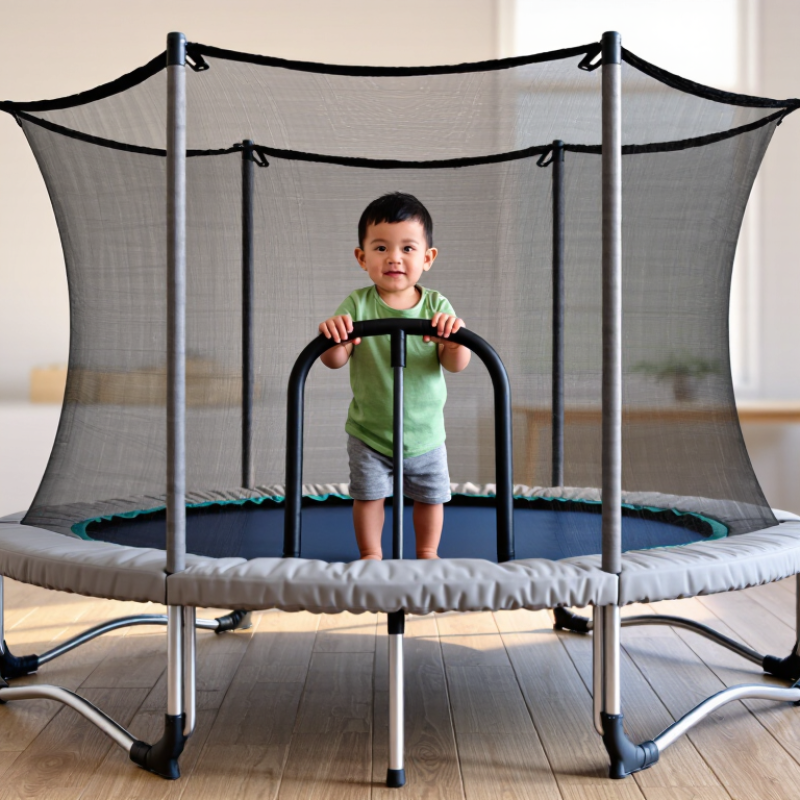
How to Choose the Best Toddler Trampoline?

Understanding Toddler Trampoline Types and Their Intended Uses

Choosing the best toddler trampoline starts with understanding its type and intended use. A low-height indoor trampoline suits small playrooms and short daily activity. It usually has a wide frame and a stable handlebar for balance. An enclosed trampoline offers extra protection during active bouncing. Its safety net should close securely and remain free from gaps. A foldable model saves storage space, but folding parts need careful inspection.

Think about your child’s movement skills, available space, and supervision routine. A beginner may need gentle bouncing support rather than a taller jumping surface. Trampolines with handrails can help children build confidence, though rails should not replace adult supervision.

Outdoor models require level ground, soft protective surfacing, and weather checks. Never place one near furniture, steps, pools, or hard walls. Use only one child at a time, even when the surface looks spacious.

Tips: Check the age, weight, and height guidance before buying. Inspect springs, seams, handles, and netting before each use. Keep sessions brief, especially for toddlers who tire quickly. Remove shoes and loose clothing. Stop play when bouncing becomes uncontrolled. I once underestimated how quickly a toddler can reach a nearby table. That mistake changed my setup routine. Safety guidance is useful, but real observation matters more. A trampoline can support balance and coordination when its design matches the child’s abilities.

Checking Safety Features, Stability, and Age-Appropriate Design

How to Choose the Best Toddler Trampoline?

Safety should guide every choice, not colorful graphics or a generous weight limit. The American Academy of Pediatrics has reported about 100,000 trampoline-related injuries annually. Its policy statement also notes that roughly three-quarters happen when multiple children jump together.

One child only. Always.

For toddlers, check the age label carefully. A product designed for older children may demand balance and coordination toddlers have not developed. The safest option may be delaying trampoline use, since the AAP advises against trampoline use for children younger than six.

If you still assess a toddler model, examine its low height, enclosed springs, stable base, padded frame, and hand-support design.

The handle should not wobble or pull the unit across a hard floor. Place it on a flat, impact-absorbing surface, away from furniture and windows.

Look for clear assembly instructions and safety information referencing ASTM F381, the consumer safety specification for trampolines. CPSC guidance also emphasizes supervision and removing nearby hazards.

A safety net is helpful, but it cannot prevent every awkward landing. Check stitching, frame joints, and rubber feet by hand before each use.

I would not treat a “safe” label as proof. Even careful adults can miss a loose bolt or cracked pad. Some designs feel stable in a showroom, then slide on polished flooring.

Age-appropriate design matters more than extra bounce.

Comparing Size, Materials, Weight Limits, and Indoor Space Requirements

How to Choose the Best Toddler Trampoline?

Size and Space

Size should match the child and the room, not just the product photo. Measure the jumping area, then leave at least 1.5 meters of clear space around it. Check ceiling height too. A low ceiling can turn a small bounce into a head injury.

Indoor Use

For indoor use, a compact frame with stable, wide feet usually works better than a larger model. It also leaves fewer obstacles nearby.

Materials and Safety Features

Materials affect both comfort and durability. Look for a tightly stretched jumping mat, covered springs, smooth frame padding, and non-slip feet.

ASTM F381 provides safety specifications for consumer trampolines, although compliance does not remove supervision needs. The American Academy of Pediatrics advises against trampoline use for children under six. That guidance is easy to overlook when a product is marketed for toddlers.

Weight Limits

Weight limits need careful reading. Use the child’s current weight, not an optimistic estimate, and avoid models with unclear limits.

Supervision and Maintenance

CPSC NEISS data has estimated more than 100,000 trampoline-related emergency-department visits in some recent U.S. reporting years. The figure includes different trampoline types, but it signals real risk. One child only. An adult should stay close. A handle may improve balance, but it cannot prevent every fall. I would also recheck bolts and foot caps weekly; product instructions can be incomplete, and indoor floors are not always level.

Evaluating Assembly, Maintenance, Portability, and Storage Options

Choosing the best toddler trampoline starts with assembly, not color or bounce. I have learned that clear instructions matter more than a low price. Check whether one adult can build it safely with ordinary tools. The frame should lock firmly, and every connection should sit flush. Do not rush this part. After assembly, gently press the frame and check for movement before allowing use. Follow the stated age, height, and weight limits carefully.

Maintenance should fit real family routines. Before each session, inspect the jumping mat, enclosure, padding, fasteners, and frame. Look for frayed fabric, loose screws, or cracked plastic. A loose bolt is easy to miss. That matters. Clean surfaces with mild soap and water, then dry them completely. Avoid harsh cleaners unless the instructions specifically permit them. Replace damaged components with approved matching parts, rather than improvising with household materials.

Portability and storage also affect everyday safety. Handles or wheels can help, but never move the trampoline while a child is inside. Measure doorways, closet space, and the folded height before buying. I would measure twice. A folding model is useful only when its locking mechanism is simple and reliable. Store the trampoline indoors, away from direct sunlight, rain, and damp floors. My own mistake was leaving outdoor equipment near a humid wall; metal parts showed rust sooner than expected. A dry corner and a breathable cover can prevent that problem.

How to Choose the Best Toddler Trampoline?

Practical comparison of common toddler trampoline designs across assembly, maintenance, portability, and storage.

Scores use a 1–10 practical suitability scale, where 10 means easier assembly, simpler maintenance, greater portability, or more convenient storage. Foldable indoor models generally perform best for limited spaces, while larger enclosed models provide more room but require more setup and storage space.

Selecting the Best Toddler Trampoline for Your Child and Home

Choosing the best toddler trampoline starts with your child’s age, balance, and your available indoor or outdoor space. The American Academy of Pediatrics advises against trampoline use for children under six, because younger children face higher risks of fractures and poor control. This recommendation should shape every buying decision, even when a product is labeled “toddler-friendly.”

Check the frame, jumping surface, padding, enclosure, and stability together. The U.S. Consumer Product Safety Commission reported about 100,000 emergency-department-treated trampoline injuries in 2014. Many incidents involved fractures, falls, or collisions. Choose a low-height design with thick, firmly attached padding and a fully enclosed jumping area. Look for compliance with applicable ASTM safety standards. Measure the ceiling, doorway, and clearance zone before purchase. A compact room can still become dangerous.

Keep the trampoline away from furniture, windows, steps, and hard flooring. Only one child should use it at a time. Adult supervision must stay close, not across the room. A handlebar may improve balance, but it is not a safety guarantee. I would also question flashy accessories that reduce the usable jumping area. A safer home choice may be delaying trampoline use and providing supervised floor-based movement instead. Active play still matters: the World Health Organization recommends at least 180 minutes of physical activity daily for children aged three to four. Small spaces need careful planning.

FAQS

What type of trampoline suits a small indoor room?

Choose a low-height model with a wide frame and stable handlebar. It needs clear floor space.

Is trampoline use suitable for toddlers?

Pediatric safety guidance generally advises avoiding trampolines for children under six. Consider delaying use. If used, choose age-appropriate equipment and stay close.

How much space should surround an indoor trampoline?

Leave at least 1.5 meters of clear space around it. Check ceiling height, windows, furniture, and nearby hard walls.

Should more than one child jump together?

No. Allow one child at a time, even on a large surface. Multiple jumpers increase collision and landing risks.

What safety features should a toddler trampoline include?

Look for a stable base, covered springs, padded framing, and non-slip feet. An enclosed net should close securely without gaps.

Can a handlebar replace adult supervision?

No. A handlebar may support balance and confidence. It cannot prevent every fall. Stay within arm’s reach.

What should parents inspect before each use?

Check bolts, frame joints, stitching, springs, handles, netting, and rubber feet. Repair loose or cracked parts before play.

What clothing and play habits are safest?

Remove shoes and loose clothing. Keep sessions brief. Stop when bouncing becomes uncontrolled.

How should outdoor trampolines be positioned?

Place them on level ground with soft protective surfacing. Keep them away from steps, pools, furniture, and hard walls. Check weather conditions.

Are safety labels enough when choosing a trampoline?

No. Check age, height, weight guidance, materials, and assembly instructions. I once underestimated how quickly a toddler reached a nearby table. Real observation matters.

Conclusion

Choosing the best Toddler Trampoline starts with understanding the different types available and selecting one designed specifically for young children. Look for age-appropriate features such as a secure handlebar, soft edges, enclosed jumping space, a stable base, and durable materials. Safety should be the highest priority, so check the recommended age range, weight limit, surface design, and overall stability before making a decision. A trampoline should also fit comfortably in the intended indoor or outdoor area without creating obstacles around it.

Consider practical details such as assembly time, cleaning, maintenance, portability, and storage. Lightweight models may be easier to move, while foldable designs can save space when not in use. Compare the trampoline’s size, construction, and weight capacity with your child’s needs and your home environment. By balancing safety, durability, convenience, and available space, parents can select a Toddler Trampoline that supports active play while providing a secure and enjoyable experience.


Henry

Henry

Henry is a dedicated marketing professional with a profound expertise in the company's offerings. With years of experience in the industry, he possesses an impressive understanding of the market dynamics and consumer behaviors that drive success. Henry is committed to sharing his insights through......