Choosing the Best Commercial Trampoline requires more than comparing prices, sizes, or colorful padding. It demands a careful look at safety, materials, user capacity, maintenance, and installation quality. A trampoline may appear impressive in a showroom, yet perform poorly under constant daily use. That difference matters.
According to commercial recreation safety consultant John B. Keller, “A trampoline is only as safe as its weakest decision.” The sentence sounds simple. It is also easy to underestimate. Buyers should inspect frame thickness, spring protection, jumping-mat durability, anchor systems, and replacement-part availability. Ask for documented testing and clear maintenance instructions. ASTM F2970 can provide a useful reference for commercial trampoline courts, although local requirements may differ. Professional installation remains essential. Even excellent equipment can become hazardous when assembled carelessly.
Experience also changes the buying decision. A busy indoor park may need modular sections, stronger padding, and fast service support. A school or family entertainment center may value easier supervision and lower maintenance demands. Noise, ceiling height, floor space, and user age groups deserve attention too. These details are not glamorous. They are costly to ignore.
There is no perfect model. Budget limits can force compromises, and that is where buyers must think honestly. The cheapest Commercial Trampoline may create higher repair costs later. A responsible choice balances durability, safety evidence, operational needs, and long-term support. Before signing a contract, request references, inspect a working installation, and question every unclear specification. The right decision should survive both excitement and scrutiny.
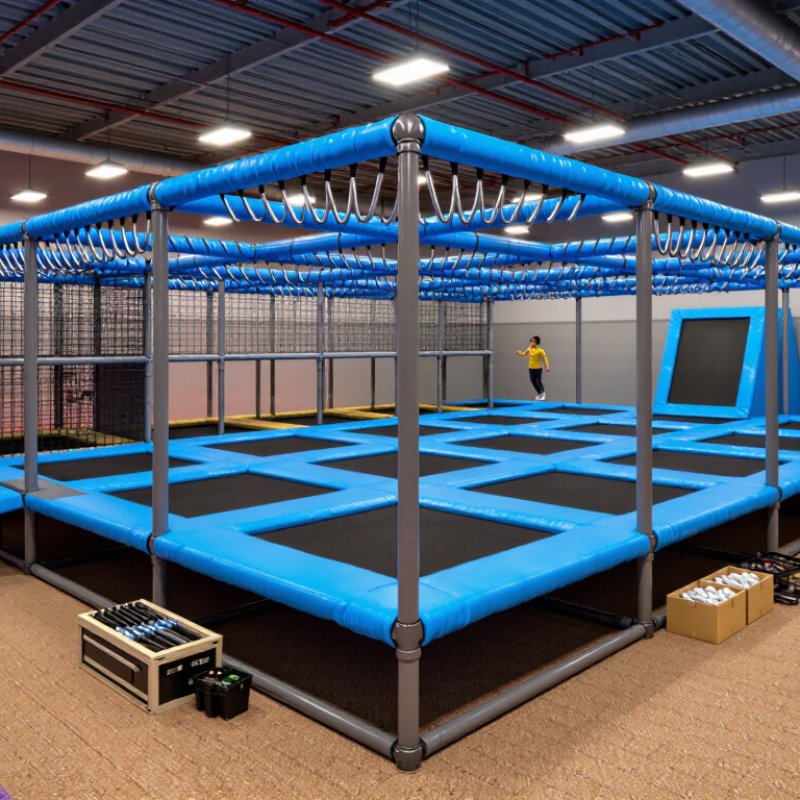
How to Choose the Best Commercial Trampoline?
Commercial trampolines serve different users, so type matters more than appearance. Interconnected court systems suit recreation parks and high visitor turnover. They support open jumping, dodgeball, and supervised group activities. Tumble tracks suit gymnastics training, cheer practice, and controlled skill development. They provide longer landing zones and directional movement. Inflatable systems fit temporary events, but their air pressure and anchoring need constant inspection.
The International Association of Trampoline Parks recommends documented inspections, trained attendants, and clear user separation. ASTM International’s F2970 standard also addresses commercial trampoline design, installation, operation, and labeling. These references should guide purchasing, not replace site-specific risk assessments. The U.S. Consumer Product Safety Commission’s NEISS injury data have historically estimated roughly 100,000 trampoline-related emergency visits annually. That figure includes varied settings, but it shows why capacity planning matters.
Match the equipment to the intended movement. A family venue may need smaller zones, low entry points, and visible supervision. A training center needs responsive surfaces, landing mats, and progression areas. Check frame joints, padding thickness, net tension, and replacement access before signing. I once considered bounce height the key feature. That was too simple. Higher bounce can increase excitement, but it may also demand stronger supervision and more recovery space. Operator training is easy to underestimate. It should be treated as part of the equipment.
When choosing a commercial trampoline, safety documentation should come before appearance or price. Ask for current test reports, material specifications, and clear operating limits. A credible supplier should explain which recognized safety standards apply to the installation location. Check whether an independent laboratory verified the enclosure, padding, jumping mat, and access gate. A compliance logo alone proves little without traceable documents.
Materials reveal how the trampoline may perform after months of heavy use. Look for corrosion-resistant steel, UV-stabilized jumping mats, and dense padding that does not absorb water easily. Inspect stitching and seams closely. Small tears can expand quickly under repeated impact. The frame should have even welds, secure joints, and no sharp exposed edges. Anchoring also matters, especially on hard floors or outdoor surfaces. It should resist movement when several users land unevenly.
Structural durability depends on more than a stated weight limit. Review fatigue-testing data, maximum user numbers, and maintenance intervals. A professional inspection should check springs, bolts, anchor points, padding compression, and frame distortion. Keep dated records, including photographs after repairs. One detail is easy to miss: drainage. Standing water can accelerate corrosion beneath protective coverings. A shiny frame may still hide weak welds. I would also question vague claims such as “industrial strength” unless measurements support them. No checklist is perfect; staff training, daily checks, and honest reporting of wear remain essential.
Choosing the best commercial trampoline starts with matching size, capacity, and site conditions. A small unit may fit a narrow venue, but it can create crowded bounce zones during peak hours. Measure the usable floor area, ceiling height, access routes, emergency exits, and clearance around every frame. Leave space for staff movement and fall protection. Do not measure only the jumping surface.
Capacity needs a practical calculation. Divide the active jumping area by the manufacturer’s tested user allowance, then reduce that number for children of different ages and skill levels. ASTM F2970 covers the design, installation, operation, inspection, and maintenance of commercial trampoline courts. CPSC injury surveillance reports have recorded more than 100,000 emergency-department-treated trampoline injuries in some high-use years. That figure deserves respect. A crowded court is not automatically profitable.
Tips: Sketch the site at full scale. Place columns, doors, lighting, and spectator rails on the drawing. Test the busiest hour, not the quiet opening period. Choose equipment with documented load testing and inspection procedures. Operators often overestimate capacity. I have seen layouts that look generous on paper but feel cramped once staff and waiting guests enter. Recheck the plan with a safety professional, and question any capacity number that lacks a clear testing method.
Matching trampoline size, capacity, and site requirements
This planning chart compares common commercial trampoline diameters with their calculated jumping area, estimated simultaneous users, and recommended minimum clear-zone diameter. Capacity is estimated at one user per 4 m² of jumping area; final limits must follow the equipment’s certified load rating, safety standards, and local regulations.
Choosing the best commercial trampoline requires more than comparing purchase prices. Maintenance demands often determine the real operating cost. In my experience, busy facilities need daily visual checks for torn padding, loose springs, exposed metal, and frame movement. Staff should record these checks, even when everything appears normal. Weekly inspections can include bolt torque, anchor stability, stitching, and drainage around the equipment. Small defects become expensive quickly.
Warranty coverage deserves careful reading. A strong warranty should clearly separate frame, springs, mat, padding, and labor coverage. Check whether commercial use is included. Some policies exclude damage caused by poor anchoring, weather, unauthorized repairs, or missed inspections. Ask about replacement shipping and response times. Written maintenance records may also support a valid claim. The fine print matters more than a large warranty number.
Total cost includes installation, safety surfacing, anchoring, staff training, inspections, replacement parts, and possible downtime. A cheaper trampoline may need frequent pad replacement or complicated repairs. A higher initial cost can be reasonable if components are durable and accessible. Calculate expenses over five years, not just the first invoice. I once underestimated cleaning and drainage work, which changed the budget. That mistake is worth remembering. Compare supplier service procedures, technical documentation, and local repair availability before choosing equipment.
Choosing a commercial trampoline starts with the supplier, not the color or advertised jump height. In my experience, dependable suppliers ask about visitor numbers, user ages, available space, and expected operating hours. They should provide clear specifications for frame steel, spring protection, mat strength, padding, and maximum user capacity. Ask for test records, installation guidance, warranty terms, replacement-part availability, and references from similar venues. A confident supplier will explain limitations instead of promising that every site is suitable.
Professional installation begins with a documented site survey. The installer should check concrete condition, drainage, ceiling clearance, access routes, and surrounding fall zones. Measure twice. A crowded layout can create collisions, even when the equipment itself is well made. Trampolines need stable anchoring and correctly fitted edge protection. Installation crews should follow the supplier’s instructions and relevant local safety requirements. Request written records, photographs, torque settings, and a handover inspection before opening.
Staff training is part of the installation plan. Operators should learn daily checks, cleaning procedures, capacity control, and emergency responses. Ask who will inspect the equipment after heavy use or unusual impact. Small details matter, such as loose stitching, exposed fasteners, or a mat that no longer sits flat. I have seen planning focus too heavily on the equipment and not enough on supervision. That mistake is easy to repeat. A realistic maintenance schedule, spare parts, and honest communication with the supplier make the facility safer and easier to manage.
| Category | Evaluation Dimension | Recommended Planning Benchmark | Suggested Weight | Verification Method | Professional Installation Consideration |
|---|---|---|---|---|---|
| Safety & Compliance | Applicable safety standards | Require documented design, manufacturing, installation, inspection, and operating procedures aligned with the regulations and standards applicable to the project location. For trampoline courts, ASTM F2970 is a commonly referenced practice in the United States. | 20% | Request current compliance documents, engineering records, inspection procedures, and local authority approvals where required. | Installation should be completed by trained personnel and coordinated with building, fire, electrical, and occupancy requirements. |
| Safety & Compliance | Impact protection system | Use purpose-designed edge pads, wall padding, access platforms, and protected structural interfaces. Padding should be securely fixed and inspected for gaps, compression, tearing, or displacement. | 15% | Review product drawings, material specifications, attachment details, and sample maintenance records. | All seams, transitions, posts, columns, and access points should be checked after installation and before public use. |
| Product Design | Frame and structural construction | Prefer corrosion-resistant metal components, stable anchoring, durable welds or mechanical joints, and replaceable structural parts suitable for repeated commercial use. | 12% | Review load calculations, material specifications, structural drawings, and component replacement procedures. | The installer should verify levelness, anchorage, fastener torque, connection alignment, and substrate suitability. |
| Product Design | Mat, bed, and spring or tension system | Select components rated for the expected user frequency and operating environment. The supplier should define inspection intervals and replacement indicators for mats, springs, straps, or tension elements. | 12% | Ask for fatigue or durability test information, spare-part availability, warranty limits, and inspection checklists. | Installation must confirm uniform tension, correct component placement, and adequate clearance from surrounding structures. |
| Site Planning | Available floor area | Prepare a scaled layout that includes trampoline modules, circulation routes, reception or check-in areas, seating, staff access, emergency exits, and service zones. Do not size the facility from jumping surface alone. | 10% | Provide the supplier with accurate architectural drawings, column locations, door widths, floor levels, and utility plans. | Conduct a pre-installation site survey to confirm dimensions, access routes, floor condition, and delivery limitations. |
| Site Planning | Clear height and overhead obstructions | Measure finished floor-to-ceiling height and identify lighting, sprinklers, ducts, beams, signs, and other overhead obstacles. The required height depends on equipment design, activity type, and local approval conditions. | 8% | Use a verified site survey rather than estimated measurements; compare the result with the supplier’s installation drawings. | Complete an overhead clearance review before ordering equipment and again after major building services are installed. |
| Supplier Capability | Commercial project experience | Prefer suppliers able to demonstrate completed commercial installations of comparable scale, operating hours, user volume, and building type. | 8% | Request anonymized project references, installation photographs, commissioning records, and client contact references where permitted. | Confirm whether the supplier provides project management, site supervision, installation, testing, and handover documentation. |
| Supplier Capability | Documentation and technical support | A complete handover package should include layout drawings, assembly instructions, inspection schedules, operating rules, cleaning guidance, spare-part lists, and emergency procedures. | 5% | Review a sample technical file before signing the purchase contract. | Require a documented commissioning process and staff training before the facility opens to customers. |
| Operations | Capacity and user-flow planning | Set operating capacity according to the equipment layout, activity type, supervision model, emergency egress, and local occupancy requirements. Avoid relying only on the total number of trampolines. | 4% | Ask the supplier for a capacity model showing activity zones, circulation paths, staff positions, and session controls. | Use separate areas or clearly defined operating rules for different activities, age groups, or skill levels when appropriate. |
| Lifecycle Cost | Warranty and replacement parts | Compare warranty coverage for frames, padding, mats, springs, nets, fasteners, and installation workmanship. Confirm the expected lead time and pricing for wear components. | 3% | Obtain written warranty terms, exclusions, service response targets, and a recommended spare-parts inventory. | Design access points so worn components can be replaced without dismantling unrelated sections. |
| Lifecycle Cost | Maintenance and inspection program | Use daily visual checks, scheduled operational inspections, and documented periodic maintenance. Remove damaged equipment from service until repaired and cleared for use. | 3% | Review inspection forms, staff responsibilities, defect classification, repair records, and escalation procedures. | Include a post-installation inspection, an opening inspection, and a recurring inspection schedule in the operating plan. |
Measure usable floor space, ceiling height, doors, exits, and access routes. Do not measure only the jumping surface. Leave room for staff movement, fall protection, and waiting guests.
Divide the active jumping area by the tested user allowance. Then reduce the result for mixed ages and different skill levels. Crowds change everything. A busy court can feel unsafe before reaching its advertised limit.
Quiet opening hours can hide layout problems. Sketch the site at full scale, including columns, lights, rails, and doors. Place staff and waiting guests on the drawing. A perfect paper plan may still feel cramped.
Staff should inspect padding, springs, mats, frames, and exposed metal daily. Look for tears, loose parts, movement, and uneven surfaces. Record every check, even when nothing looks wrong. Small defects grow quickly.
Check bolt torque, anchor stability, stitching, drainage, and frame connections. Inspect areas beneath and around the equipment. Water near the structure can create longer-term problems. I once underestimated drainage work.
It should separate coverage for frames, springs, mats, padding, and labor. Confirm that commercial use is included. Ask about shipping, response times, weather damage, repairs, and missed inspections. The fine print matters.
Request material specifications, load-testing records, capacity limits, installation instructions, and replacement-part details. Ask for references from similar facilities. A reliable supplier should explain site limitations honestly. Big promises are not enough.
Installers should inspect concrete, drainage, ceiling clearance, access routes, and fall zones. They must secure the equipment and fit edge protection correctly. Request photographs, torque settings, and a handover inspection. Measure twice.
Include installation, safety surfacing, anchoring, training, inspections, cleaning, repairs, parts, and downtime. Compare expected expenses over five years, not only the first invoice. A cheaper unit may need frequent padding replacement. My original estimate was too optimistic.
Choosing the best Commercial Trampoline begins with understanding its intended use, whether for indoor recreation centers, outdoor parks, fitness facilities, or supervised entertainment areas. Buyers should evaluate safety features, frame construction, padding, netting, jumping surfaces, and material quality to ensure the equipment can withstand frequent use. Compliance with relevant safety standards and careful attention to structural durability are essential for protecting users and reducing long-term risks.
The trampoline should also match the available site, expected user capacity, age requirements, and installation conditions. Compare maintenance routines, replacement-part availability, warranty coverage, and the total cost of ownership rather than focusing only on the initial price. Finally, select a reliable supplier that provides clear technical information, responsive support, and professional installation guidance. Proper site preparation, secure assembly, regular inspections, and a practical maintenance plan will help maximize safety, performance, and service life.

Lingsha